
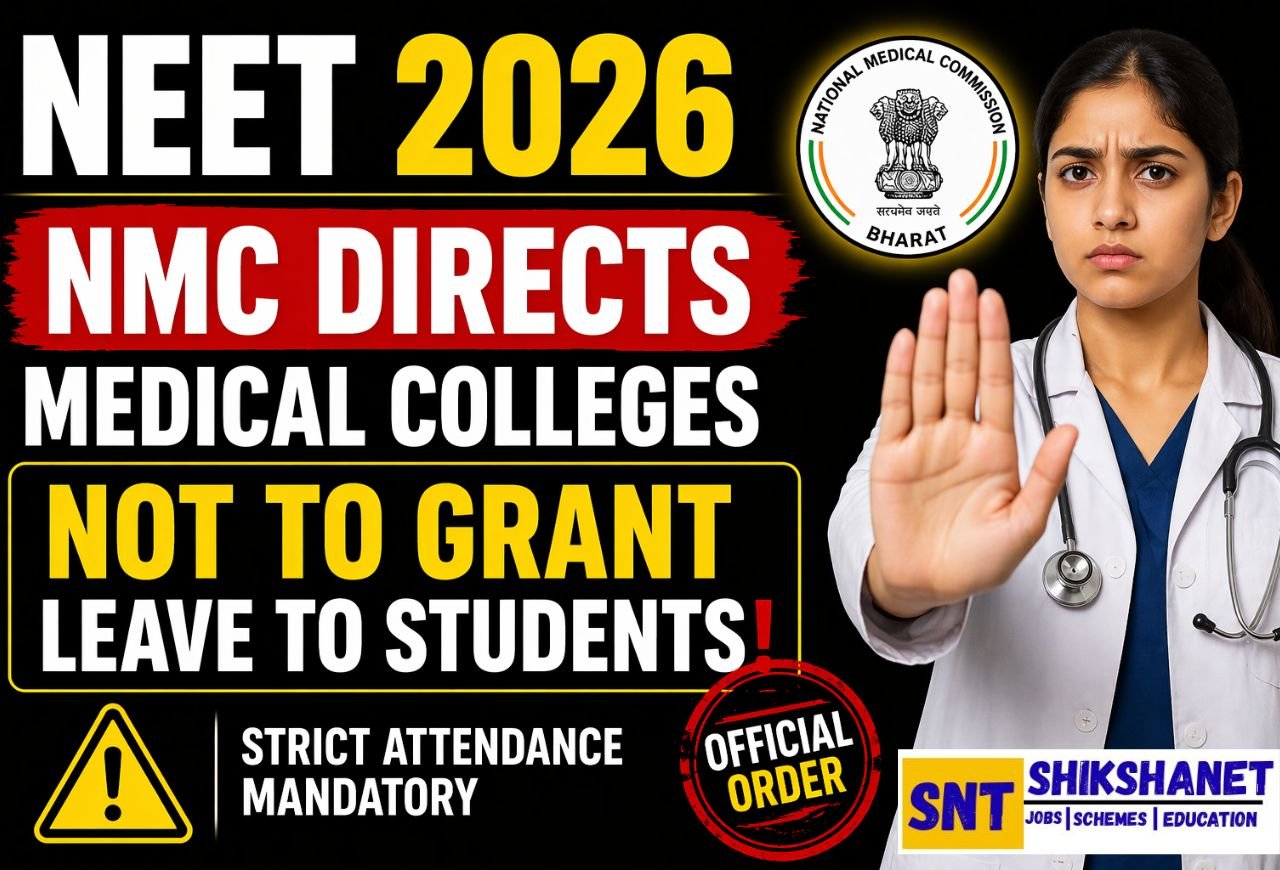
The NEET 2026 landscape has witnessed a major policy development as the National Medical Commission (NMC) has directed all medical colleges across the country not to grant leave to students during the academic schedule. This move is being seen as part of a broader effort to strengthen the quality of medical education in India by ensuring that students remain consistently engaged in both theoretical and practical learning environments.
With the National Eligibility cum Entrance Test serving as the gateway to medical education, the expectations from students do not end after securing admission. Instead, the journey becomes more rigorous and demanding, requiring discipline, commitment, and continuous participation. The latest directive reflects the regulator’s intention to ensure that future doctors are trained under strict academic conditions, minimizing absenteeism and maximizing learning outcomes.
Key Highlights of NMC Directive for NEET 2026
| Particulars | Details |
|---|---|
| Exam Name | NEET 2026 |
| Authority | National Medical Commission (NMC) |
| Directive | No leave for students |
| Applies To | Medical colleges across India |
| Purpose | Improve discipline and attendance |
| Impact | Strict monitoring of student presence |
| Status | Officially confirmed |
| Mode | Circular issued |
What the NMC Directive Means
The National Medical Commission has issued a clear instruction that medical colleges must avoid granting leave to students during ongoing academic sessions, emphasizing that consistent attendance is not optional but a fundamental requirement for medical training, as missing lectures, labs, or clinical postings can create serious gaps in knowledge and practical exposure.
Reason Behind the No-Leave Policy
The decision stems from increasing concerns over irregular attendance patterns observed in medical institutions, where students taking frequent leave were found to be missing out on critical clinical experiences and structured learning opportunities, prompting the authorities to intervene and establish stricter guidelines to maintain uniform academic standards.
Impact on Medical Students
The directive will significantly affect students by limiting their ability to take leave for non-essential reasons, thereby requiring them to prioritize academic responsibilities and remain present for lectures, ward rounds, laboratory sessions, and other mandatory components of their medical education.
Implementation by Medical Colleges
Medical colleges are expected to implement this directive by tightening attendance policies, maintaining accurate records, and ensuring that leave is granted only in exceptional circumstances, aligning their internal regulations with the expectations set by the National Medical Commission.
Importance of Attendance in Medical Education
Attendance is a cornerstone of medical education because it ensures that students gain continuous exposure to real-life medical scenarios, patient interactions, and clinical decision-making processes, all of which are essential for developing the competence required in the healthcare profession.
Reaction from Students and Institutions
The directive has generated varied responses, with some students appreciating the focus on discipline and quality while others expressing concerns about reduced flexibility, especially in managing personal commitments, highlighting the balance that institutions must maintain between strict rules and student well-being.
Challenges Faced by Students Due to the Directive
Students may face challenges such as difficulty managing personal emergencies, increased academic pressure, and limited time for extracurricular activities, making it essential for them to adopt better time management strategies and seek support from institutions when needed.
How This Affects NEET 2026 Aspirants
Although the directive primarily targets students already enrolled in medical colleges, it sends a strong message to NEET 2026 aspirants about the level of commitment required in the medical field, encouraging them to prepare mentally for a disciplined and demanding academic environment.
Role of Medical Colleges in Ensuring Compliance
Medical colleges play a crucial role in enforcing this directive by creating a structured academic environment, monitoring attendance regularly, and ensuring that students understand the importance of adhering to the guidelines set by the National Medical Commission.
What Students Should Do Now
Students should focus on adapting to the new rules by planning their schedules effectively, prioritizing attendance, and maintaining a balance between academic responsibilities and personal needs while staying informed about official updates.
Key Takeaways from the NMC Order
- The directive has been officially issued by the National Medical Commission
- Medical colleges must restrict leave for students
- Attendance requirements will be strictly enforced
- Only genuine emergencies may be considered for leave
- The policy aims to improve the quality of medical education
Long-Term Impact on Medical Education in India
In the long term, this directive is expected to bring significant improvements in the standard of medical education by ensuring that students receive uninterrupted training, which will enhance their skills, confidence, and readiness to handle real-world medical challenges effectively.
Why Consistent Training Matters in Medicine
Medicine is a field where continuous learning is essential, as even a single missed concept or clinical experience can impact a student’s ability to diagnose and treat patients accurately, making consistent training a non-negotiable aspect of becoming a competent doctor.
Balancing Discipline and Student Well-Being
While strict attendance policies are necessary, it is equally important for institutions to consider student well-being by providing support systems, counseling services, and flexibility in genuine cases, ensuring that students can cope with academic pressure without compromising their mental health.
Future Outlook for Medical Education Policies
The directive by the National Medical Commission indicates a shift toward stricter and more structured policies in medical education, suggesting that future reforms may further emphasize accountability, performance, and consistent participation from students.
FAQs Of NEET 2026 update
1. What is the latest NEET 2026 update?
The National Medical Commission has directed medical colleges not to grant leave to students.
2. Who does this directive apply to?
It applies to students currently studying in medical colleges across India.
3. Why has NMC introduced the no-leave rule?
To improve attendance, discipline, and the overall quality of medical education.
4. Are students allowed to take leave in emergencies?
Yes, leave may be granted in genuine emergency situations.
5. How will colleges enforce this directive?
By maintaining strict attendance records and limiting leave approvals.
6. Does this affect NEET aspirants directly?
Not directly, but it highlights the strict academic environment they will face.
7. What is the main goal of this directive?
To ensure continuous learning and better clinical exposure for students.
8. Where can I check official updates?
Students can check updates from the National Medical Commission.
Conclusion
The directive issued by the National Medical Commission for NEET 2026 represents a decisive step toward strengthening the discipline and quality of medical education in India, ensuring that students receive the rigorous training required to excel in the healthcare profession while also preparing them to meet the growing demands of the medical field with confidence and competence.